

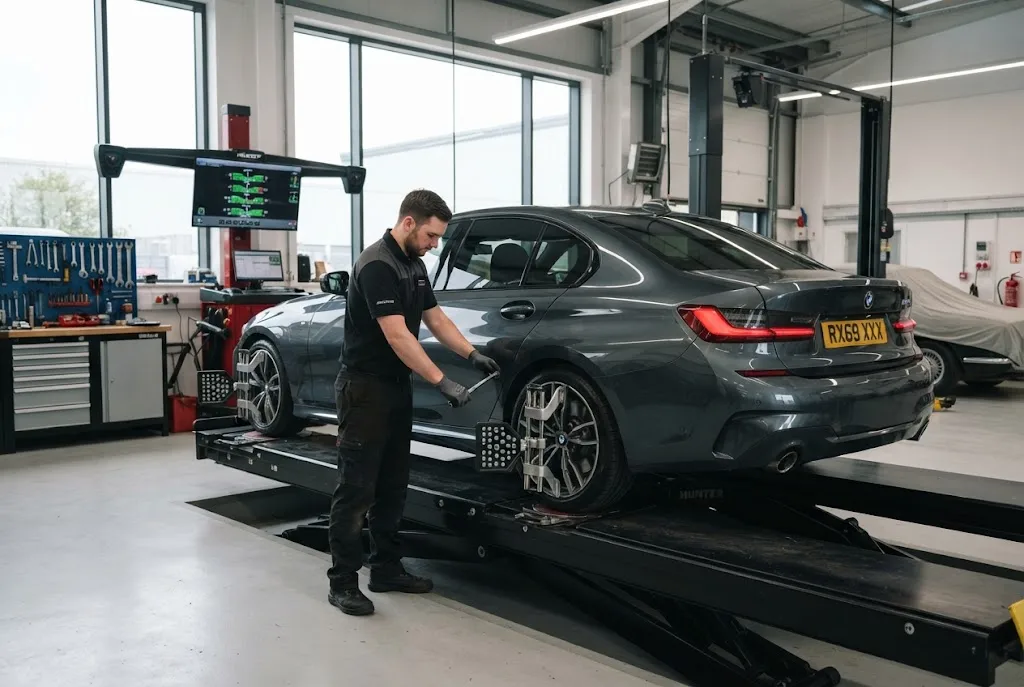
Wheel alignment is an important part of vehicle maintenance that can affect steering, handling, tyre wear and driving comfort. When the wheels are correctly aligned, the vehicle should track properly and the tyres should make appropriate contact with the road. When alignment is incorrect, drivers may notice the car pulling to one side, an off-centre steering wheel or uneven tyre wear.
For UK motorists, understanding wheel alignment can help prevent avoidable tyre costs and identify handling problems before they become more serious. Wheel alignment is sometimes called wheel tracking, although modern alignment services can involve several measurements and adjustments rather than simply correcting the front wheels.
What Is Wheel Alignment?
Wheel alignment is the process of checking and, where necessary, adjusting the angles of a vehicle’s wheels so they meet the manufacturer’s specifications. The objective is to ensure that the wheels are positioned correctly in relation to each other and the road.
Alignment can involve several geometric measurements, including toe, camber and caster. The precise specifications vary between vehicles, which is why professional alignment equipment and vehicle-specific data are important when carrying out the service.
Correct alignment can help a vehicle maintain predictable handling while reducing the likelihood of premature or uneven tyre wear. It can also be relevant when investigating steering problems or changes in the way a vehicle behaves on the road.
Wheel Alignment and Wheel Tracking: Are They the Same?
Wheel tracking is a commonly used term for alignment work, particularly when discussing the direction in which the front wheels point. In everyday conversation, motorists may use “tracking” and “alignment” interchangeably.
However, a modern wheel alignment service can involve more comprehensive measurements than basic front-wheel tracking. Depending on the vehicle, the technician may check all relevant wheels and suspension geometry before deciding whether adjustments are required.
This distinction matters because a vehicle can have a steering or handling issue that cannot be fully addressed by a simple front-wheel adjustment. A proper assessment should consider the vehicle manufacturer’s specifications and the condition of relevant steering and suspension components.
Signs You May Need Wheel Alignment
Some alignment problems are easy to notice, while others become apparent through gradual tyre wear. Drivers should pay attention to changes in steering and handling rather than waiting until a tyre has become significantly worn.
Common signs that may justify an alignment check include:
- The vehicle pulls noticeably to one side on a suitable straight road
- The steering wheel appears off-centre when driving straight
- Tyres show uneven or accelerated wear
- The vehicle feels less stable than usual
- Steering behaviour has changed after hitting a pothole or kerb
- New tyres begin wearing unevenly soon after fitting
- The vehicle’s handling feels different following suspension or steering work
These symptoms do not automatically prove that alignment is the cause. Incorrect tyre pressures, worn suspension components, braking problems and other faults can create similar symptoms. A professional inspection can help identify the underlying issue.
Uneven Tyre Wear and Wheel Alignment
Uneven tyre wear is one of the clearest reasons to investigate wheel alignment. When wheels are not positioned correctly, the tyre may not contact the road evenly across its tread. This can cause certain areas to wear faster than others.
GOV.UK guidance states that excessive or uneven tyre wear can be caused by faults in braking or suspension systems or by wheels that are out of alignment. It advises motorists to have these faults corrected as soon as possible. Professional tyre services can therefore be an important part of diagnosing and addressing wear-related problems.
Drivers should not assume that replacing an unevenly worn tyre will solve the underlying problem. If the cause is an alignment issue, fitting a new tyre without correcting the geometry may allow the same wear pattern to return.
How Steering Alignment Affects Driving
Steering alignment can influence how confidently a vehicle responds to driver inputs. When the wheels are correctly positioned, the car should generally maintain its intended path without requiring constant steering correction on a suitable road.
A steering wheel that sits noticeably off-centre can be a useful warning sign, particularly when it appears after a kerb impact, pothole strike or suspension repair. However, the symptom should be assessed alongside other possible causes rather than treated as definitive proof of misalignment.
Drivers who notice a persistent pull, unusual steering response or changes in tyre wear should have the vehicle checked. Delaying an assessment can allow a relatively straightforward issue to contribute to further tyre or component wear.
What Happens During a Wheel Alignment Check?
A professional alignment service normally begins with an assessment of the vehicle and its wheels and tyres. The technician may check tyre pressures, inspect the condition of relevant components and identify any obvious problems that could affect alignment measurements.
Specialist equipment is then used to measure wheel angles against the manufacturer’s recommended specifications. Depending on the vehicle and the type of system being used, sensors or targets may be attached to the wheels so that precise measurements can be taken.
If the measurements show that adjustments are required and the relevant components allow adjustment, the technician can make the necessary changes. The vehicle may then be measured again to confirm the results.
This process is important because alignment should not simply be adjusted until the steering “feels right”. Accurate measurements provide a more reliable basis for deciding what needs to be changed.
Alignment Technology Is Becoming More Precise
Modern alignment technology allows workshops to measure wheel geometry with a high degree of precision. Computerised systems can compare measured angles against vehicle-specific specifications and provide technicians with information about where adjustments may be required.
The technology used varies between workshops and vehicle types. Some systems use camera-based equipment, while others use electronic sensors or targets attached to the wheels. The underlying purpose remains the same: measure the vehicle accurately and identify deviations from the appropriate specifications.
Technology can make alignment measurements more consistent, but equipment alone does not replace proper diagnosis. The condition of tyres, steering components, suspension and wheels still matters. If a component is worn or damaged, simply adjusting alignment may not resolve the problem.
Wheel Alignment vs Wheel Balancing
The Wheel alignment and wheel balancing are separate services, although both can affect how a vehicle feels while driving.
Wheel alignment concerns the position and angles of the wheels. Wheel balancing concerns the distribution of weight around a wheel and tyre assembly. An imbalance can contribute to vibration, particularly at certain speeds, while misalignment is more commonly associated with tracking problems, steering behaviour and uneven tyre wear.
It is therefore important to describe the symptoms accurately when booking a service. A technician can then determine whether alignment, balancing or another mechanical inspection is appropriate.
Drivers who have recently had new tyres fitted may also want to ask whether balancing has been completed as part of the fitting process. Keeping both tyre and wheel condition under control supports better overall vehicle maintenance.
When Should You Have Wheel Alignment Checked?
There is no single universal interval that applies to every vehicle and driving situation. Alignment should be considered when symptoms develop or when an event could have affected wheel geometry.
A check may be sensible after hitting a significant pothole or kerb, after certain suspension or steering repairs, or when new and unusual tyre wear becomes visible. It can also be useful when the steering no longer feels consistent with how the vehicle previously behaved.
Regular visual tyre checks can help motorists spot problems early. The Highway Code advises drivers to check tyre pressures weekly and notes that uneven tyre wear can be associated with wheels being out of alignment. The Highway Code’s vehicle maintenance guidance provides further information.
How Much Does Wheel Alignment Cost in the UK?
Wheel alignment pricing varies between providers and depends on the vehicle, the type of alignment service required and the equipment being used. A basic check may cost less than a comprehensive four-wheel alignment with adjustments.
Other factors can influence the final price. Some garages advertise a fixed alignment service, while others may charge differently depending on whether adjustment is required. Specialist or performance vehicles may also require different procedures or manufacturer-specific settings.
When comparing alignment pricing, motorists should check exactly what is included. A quotation may cover measurement only, while another provider may include adjustments and a final measurement. Comparing like-for-like services gives a clearer picture of value.
Can Wheel Alignment Save Money?
Correct alignment can potentially help motorists avoid premature tyre wear. If a tyre is wearing unevenly because of incorrect wheel geometry, addressing the cause may help the replacement tyre wear more consistently.
However, alignment should not be viewed as a guarantee of longer tyre life. Tyre pressure, driving style, road conditions, suspension condition, braking components and tyre quality can all influence wear.
The financial benefit is therefore best understood as part of preventative maintenance. Identifying a problem early may reduce the likelihood of repeatedly replacing tyres without addressing the reason they are wearing incorrectly.
What to Ask a Wheel Alignment Provider
Before booking a service, drivers can ask a few straightforward questions to understand what they are paying for.
- Is the service a measurement, an adjustment, or both?
- Will the alignment be checked against the vehicle manufacturer’s specifications?
- Does the service cover the wheels relevant to the vehicle’s alignment system?
- Will the technician inspect tyres and suspension-related components first?
- Will the results be provided after the alignment?
- Are any additional charges likely if adjustments are required?
Clear answers can make it easier to compare garages and avoid confusion about what an advertised alignment price actually includes.
Wheel Alignment as Part of Wider Vehicle Maintenance
Wheel alignment should be considered alongside tyre maintenance, steering, suspension and other routine vehicle care. A change in alignment can sometimes be a symptom of an impact or a component problem rather than an isolated adjustment issue.
For used-car buyers, tyre wear can also provide useful clues about a vehicle’s condition. Uneven wear may warrant further investigation, particularly when combined with other signs of steering or suspension problems. A thorough vehicle inspection can provide a broader assessment when buying a second-hand car.
Likewise, motorists planning vehicle maintenance should consider unexpected repair costs alongside routine expenses. Understanding options such as repair finance may be useful when a necessary repair becomes difficult to manage within a normal monthly budget.
Final Thoughts on Wheel Alignment
Wheel alignment is more than a comfort adjustment. Correct wheel geometry can support predictable handling and help prevent certain forms of uneven tyre wear. Warning signs such as pulling to one side, an off-centre steering wheel or unusual tread wear should therefore be investigated rather than ignored.
Modern alignment technology allows garages to measure wheel angles accurately, but good results still depend on proper diagnosis and the condition of the vehicle’s tyres, steering and suspension components.
For UK motorists, the best approach is simple: monitor tyre wear, pay attention to changes in steering and handling, and arrange a professional wheel alignment check when there is a reasonable indication that the geometry may have changed. Addressing problems early can support safer driving and more sensible vehicle maintenance costs over time.
