Every year, travellers lose money before their holiday even begins, simply by buying their travel money in the wrong place. Airport bureaux, high-street banks, prepaid cards and debit cards all convert your pounds at different rates, and the gap between the best and worst option on a typical trip can be surprisingly wide. Understanding how travel money works helps you keep more of your holiday budget for the holiday itself. This guide explains the main ways to take money abroad, how exchange rates and fees really work, and how to choose the right mix for your trip.
How Exchange Rates and Fees Actually Work
The rate you see on the news is the interbank or “mid-market” rate, the rate banks use between themselves. You will almost never receive that exact rate as a customer. Providers add a margin, sometimes called a markup or spread, and some add fixed fees on top. A provider advertising “zero commission” may simply be offering a poorer rate instead, so the honest way to compare is to ask one question: how much foreign currency do I receive for my pounds, after every charge?
Two other traps catch travellers out. The first is dynamic currency conversion: when a foreign card machine or cash machine offers to charge you “in pounds”, it uses the local provider’s rate, which is usually worse than your own bank’s. Choosing to pay in the local currency is nearly always the better option. The second trap is weekend markups and out-of-hours fees, which some app-based providers apply when currency markets are closed. Knowing these basics is the foundation of smart travel money planning.
Cash: Still Useful, Rarely the Whole Answer
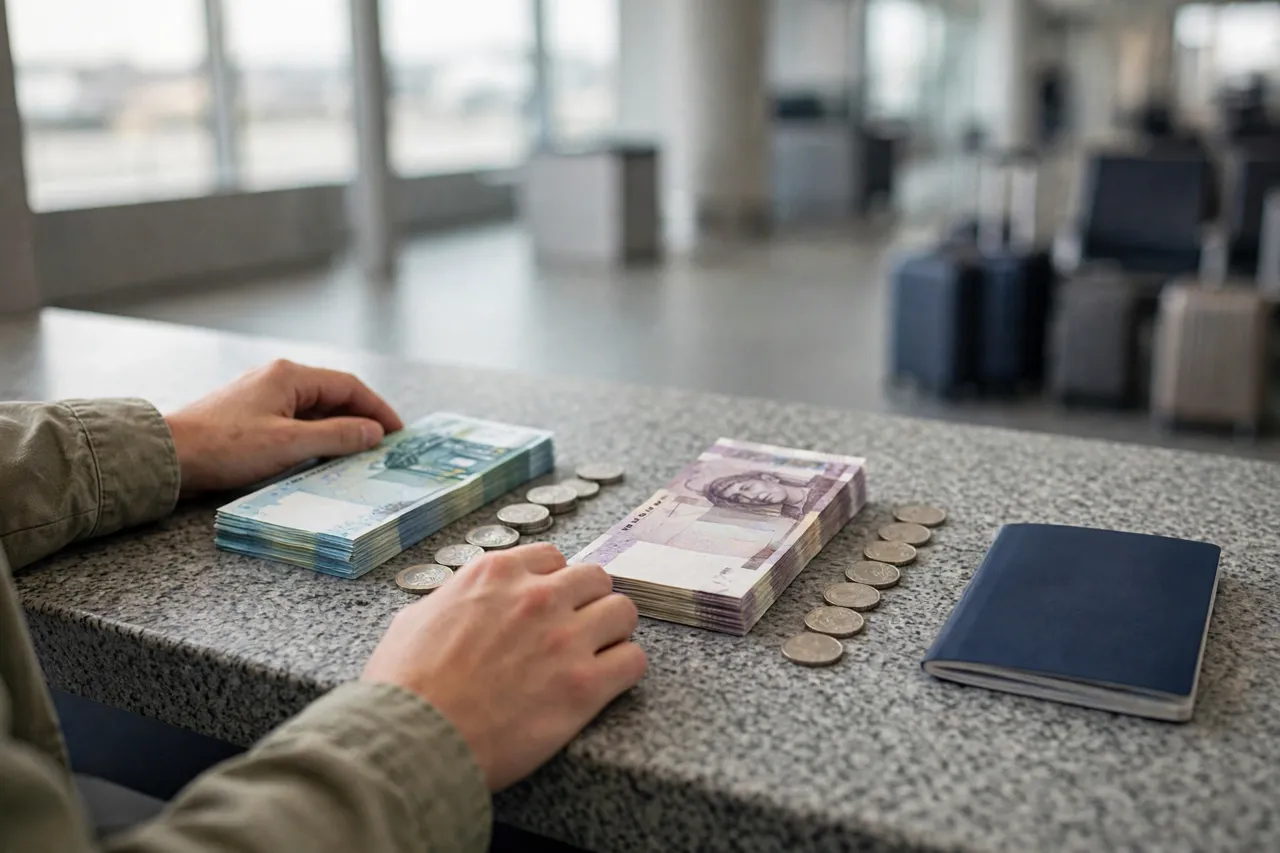
Cash remains handy for taxis, tips, markets and small cafés, and in some destinations cards are still not widely accepted. Ordering currency online in advance for home delivery or branch collection almost always beats buying at the airport, where rates are notoriously poor because the customer is captive. Order a few days ahead, because less common currencies may not be held in stock.
Carrying large amounts of cash has obvious risks, so split it between bags and use the hotel safe. Also remember that your travel insurance policy will only cover a limited amount of cash if it is stolen, which is one reason to read your policy wording carefully. Our guide on travel insurance excess explains how limits and excesses work, and it is worth checking how long your travel insurance lasts if you are taking an extended trip.
Debit and Credit Cards Abroad
Many UK travellers now rely mainly on cards. Standard high-street debit cards often add a foreign transaction fee and use their own exchange rate, which makes small purchases expensive. Specialist travel debit cards and app-based accounts, by contrast, typically convert at or near the interbank rate with low or no fees, and they make it easy to hold balances in different currencies before you travel.
Credit cards can offer good exchange rates and purchase protection, but they are a poor way to withdraw cash abroad, because interest usually starts immediately on cash advances. Whichever card you take, tell your bank about your trip if their app asks, carry at least one backup card from a different network, and keep a note of the bank’s lost-and-stolen number somewhere separate from your wallet. Cards are also the normal way to pay for extras once you arrive, from hotel deposits to car rental in Prague or car hire in Bratislava, where a credit card in the driver’s name is often required for the security deposit.
Prepaid Travel Money Cards
Prepaid travel money cards sit between cash and bank cards. You load them with pounds and convert to the currency you need, sometimes locking in a rate in advance. They are useful for budgeting, because you can only spend what you loaded, and if the card is lost, the money in your main bank account is not exposed. They suit travellers who like certainty and families giving teenagers a controlled holiday budget.
The downsides are the fine print: some cards charge for loading, withdrawing cash, inactivity or getting your leftover money back, and leftover small balances in several currencies can be fiddly to reclaim. Car hire firms and some hotels also refuse prepaid cards for deposits, because they cannot place a hold on funds in the same way. Compare the total cost, not the headline rate, before choosing one.
Matching Your Money to Your Type of Trip
Different trips reward different setups. On a European city break, where cards are accepted almost everywhere, a travel debit card and a small amount of euro cash for the first taxi and coffee is usually all you need. A beach holiday in a resort area calls for a little more cash for beach bars, boat trips and local excursions, while a multi-country tour means thinking ahead about more than one currency, and possibly loading a card that holds several balances at once.
Business travellers should keep company and personal spending separate, both for expenses and because a card being declined abroad is far more awkward in front of clients. Backpackers on long trips should prioritise low ATM fees and an account that does not punish frequent small withdrawals, and everyone travelling somewhere with unreliable connectivity should carry enough cash to cover a day or two, because card machines and banking apps are only useful when they can get online.
Building the Right Mix for Your Trip
For most UK travellers, the strongest setup is a combination: a fee-free or low-fee travel debit card for everyday spending, a modest amount of local cash ordered in advance for arrival expenses and small purchases, and a backup card kept separately. City breaks in Europe need less cash than rural trips or destinations where card acceptance is patchy, so adjust the balance to where you are actually going.
A few final habits protect your budget. Set a spending alert on your banking app so you see each transaction in pounds as it happens. Avoid exchanging money back at the airport on your return; spend small leftovers or keep notes for a future trip. And think about money alongside the rest of your travel admin: if your flight is disrupted, knowing your cover for delays matters too, so read our explainer on travel insurance delayed flight cover, and if you travel several times a year, check whether an annual policy beats single-trip cover and whether you can hold two travel insurance policies without overlap problems.
Travel money is not the most exciting part of a holiday, but ten minutes of planning before you go can quietly save enough for a very good meal when you get there. Compare the total cost, dodge the airport bureau, pay in local currency, and travel with a sensible mix. Your future self, standing at a café till abroad, will thank you.