

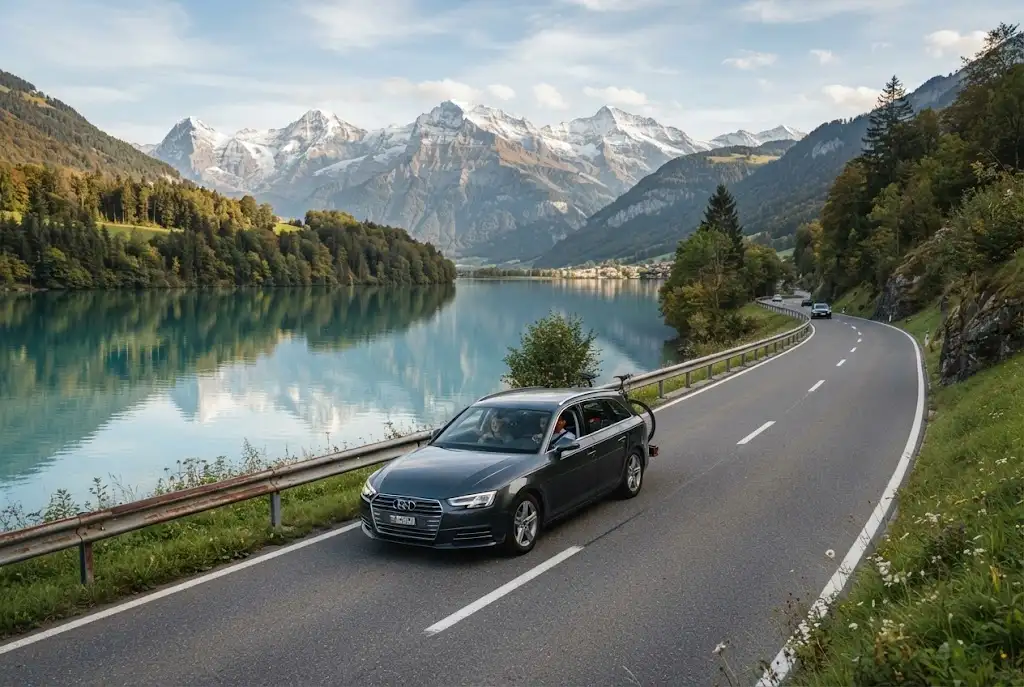
When Does Car Rental Switzerland Make Sense?
A rental car can be useful when your itinerary goes beyond the main urban centres. Travellers staying in Zurich, Geneva or Basel may be able to rely on public transport for much of their city sightseeing. However, visitors planning to explore mountain areas, lakeside towns or several smaller destinations may appreciate the flexibility of driving.
Switzerland Tourism specifically presents travelling by car as an option for exploring the country and provides information about car rental, motorway vignettes and road-trip routes.
Another practical approach is to combine transport methods. You might spend the first part of a trip in a city without a vehicle, then collect a rental car when you are ready to explore beyond the urban area. This can reduce unnecessary parking costs while retaining the freedom of a road trip.
Choosing a Car Rental in Switzerland
When comparing a Swiss car rental, start with your route rather than the vehicle’s headline price. A small car can be convenient for city streets and parking, while additional luggage space may be more important for families or travellers planning longer journeys.
If your itinerary includes mountain roads, check the rental company’s vehicle recommendations and seasonal conditions. A comfortable vehicle with adequate luggage capacity can make a significant difference when several hours of driving are involved.
Automatic transmission should also be confirmed during the reservation if that is what you normally drive. Similarly, check whether the vehicle has the equipment you need for your trip rather than assuming optional features will be included.
Rent a Car in Switzerland for a Road Trip
One of the biggest advantages of choosing to rent a car in Switzerland is the opportunity to turn the journey itself into part of the holiday. Switzerland Tourism’s Grand Tour of Switzerland is designed around driving and covers a scenic route through different regions of the country. The core route is approximately 1,643 kilometres and includes lakes, mountain scenery and major attractions.
You do not need to follow the complete Grand Tour to enjoy a Swiss road trip. A shorter itinerary can focus on a particular region, such as the route between Zurich and the Bernese Oberland, or a combination of Geneva, lakeside destinations and Alpine areas.
Keep the driving schedule realistic. Mountain roads can take longer than their distance suggests, and stopping at viewpoints, towns and attractions is an important part of the experience.
Understanding the Swiss Motorway Vignette
The motorway vignette is an important consideration for anyone planning to use Swiss motorways. Switzerland Tourism states that motor vehicles require a vignette to use the country’s motorways. The current price is CHF 40, and the vignette can be purchased at locations including customs offices, post offices, petrol stations and online.
The vignette is valid for 13 months, beginning on 1 December of each year. Switzerland also offers an electronic version linked to the vehicle’s registration number.
If you collect a rental vehicle, ask the rental company whether the required vignette is already provided and confirm the vehicle’s status before using a Swiss motorway. This is particularly important if you are collecting a car near the border or using a vehicle rented in another country.
Driving Rules to Know in Switzerland
Before beginning your journey, familiarise yourself with the country’s basic road rules. Switzerland Tourism lists general speed limits of 50 km/h in built-up areas, 80 km/h outside built-up areas and 120 km/h on motorways unless signs indicate otherwise.
Traffic signs and local restrictions always take priority over general limits. Drivers should also pay close attention to parking rules, right-of-way arrangements and road conditions.
Switzerland requires vehicles to use lights during the day. Switzerland Tourism also notes that foreign visitors can drive in Switzerland for up to one year when they meet the applicable age requirements and hold a valid national or international driving licence.
Because regulations can change, check the current official requirements before travelling, particularly if you are driving a vehicle rented outside Switzerland.
Car Rental in Switzerland During Winter
Seasonal conditions deserve particular attention when planning a winter road trip. Mountain weather can change quickly, and routes through higher elevations may have conditions that are very different from those in the cities.
Switzerland Tourism explains that winter tyres are not generally compulsory during the winter months, but drivers must still be able to control their vehicle in the prevailing conditions. The organisation recommends winter tyres from October to Easter and notes that snow chains can become mandatory where road signs specifically require them.
If you are travelling during colder months, ask the rental company about the vehicle’s tyres and equipment before collection. Do not assume that conditions in Zurich or Geneva will reflect those on higher mountain roads.
Zurich Car Rental
Zurich car rental can be useful for travellers who want to combine Switzerland’s largest city with destinations beyond the urban area. The Zurich itself has strong public transport connections, so a vehicle may be more useful once your itinerary moves towards lakes, countryside or other regions.
If you are arriving at Zurich Airport, consider whether you want to collect the vehicle immediately or spend a few days exploring Zurich first. Delaying collection can be practical if the car would otherwise remain parked while you visit the city.
For a longer road trip, Zurich can provide a convenient starting point for routes towards central Switzerland and Alpine destinations. Plan each day’s driving around the places you genuinely want to visit rather than trying to cover too much distance.
Basel Car Rental
Basel car rental can suit travellers who want to combine Switzerland with nearby destinations in neighbouring countries. Basel’s location near France and Germany makes it particularly relevant for multi-country itineraries.
However, international border travel should always be checked against the rental company’s terms. A rental agreement may include specific requirements for taking the vehicle into another country.
Before leaving Basel, confirm whether cross-border travel is permitted, whether additional charges apply and what documentation you need. This is especially important when your itinerary includes several European countries.
Geneva Car Hire
Geneva car hire can be convenient for travellers planning to explore the western part of Switzerland or continue into neighbouring France. As with any Swiss rental, the most useful pickup point depends on your itinerary.
If you are spending several days in Geneva itself, consider whether you need the vehicle immediately. Parking and urban driving can add complexity to a city-focused itinerary. On the other hand, collecting a car when you are ready to leave the city can make the transition to a wider road trip easier.
Always confirm the rental company’s policy before crossing the Swiss-French border. International travel permissions can differ between providers and vehicle categories.
Parking During Your Swiss Car Rental
Parking requires some advance planning, especially in city centres and popular tourist destinations. Before arriving at a hotel, check whether it has dedicated parking and whether spaces need to be reserved.
For urban sightseeing, consider leaving the vehicle in a designated car park and using local public transport or walking for the rest of the day. This can be more convenient than repeatedly searching for spaces.
In mountain and rural areas, follow marked parking arrangements and avoid leaving vehicles in locations that could obstruct roads, access routes or private property. Switzerland Tourism also advises visitors to park only in designated areas and follow local driving rules.
What to Check Before Collecting the Car
Before driving away, inspect the vehicle and compare its condition with the rental company’s documentation. Check visible marks, wheels, mirrors, windows and bumpers, and photograph existing damage where appropriate.
Confirm the fuel level and understand the return policy. If you have selected an electric vehicle, check the charging equipment and return requirements before beginning your journey.
You should also verify the security deposit, insurance arrangements, excess, mileage allowance and additional-driver conditions. Understanding these details before leaving the rental station can prevent confusion later.
Cross-Border Travel from Switzerland
Switzerland’s central European location makes it tempting to include France, Germany, Italy, Austria or Liechtenstein in the same trip. A rental car can make this possible, but permission should never be assumed.
Check your rental agreement before crossing any international border. Some providers may require advance notification or charge additional fees for international travel.
This is particularly relevant when comparing a Swiss rental with a vehicle collected in Germany. If your wider itinerary includes both countries, review the rental conditions carefully before selecting your pickup location.
For travellers beginning in Germany, our Munich car rental guide provides additional information about starting a road trip in southern Germany. Those travelling through western Germany can also review our guides to Düsseldorf Airport car rental and car hire in Cologne.
Planning a Switzerland Road Trip
A successful Swiss road trip is less about covering the maximum distance and more about creating a manageable route. Switzerland Tourism’s Grand Tour information notes that the core route is around 1,643 kilometres and recommends allowing at least seven days when driving for around five hours a day.
That provides a useful reminder that mountain scenery and scenic stops deserve time. Build breaks into the itinerary and avoid treating every journey as a point-to-point transfer.
If your trip includes Zurich, Basel and Geneva, consider whether visiting all three cities fits naturally into your route. Depending on your arrival and departure airports, a one-way rental could potentially reduce backtracking, although you should compare any applicable one-way charges.
Final Tips for Car Rental Switzerland
Car rental Switzerland can be an excellent option for travellers who want the freedom to explore beyond the main cities. The key is to match the rental period to your itinerary, choose a suitable vehicle and understand the country’s motorway and driving requirements before setting off.
Check the motorway vignette arrangements, especially if you are collecting a vehicle outside Switzerland. Switzerland Tourism confirms that motorways require a vignette and that the current price is CHF 40.
For city-focused trips, consider delaying your rental until you actually need the vehicle. For scenic journeys, allow plenty of time for mountain routes and stops. Finally, check cross-border permissions if your itinerary includes neighbouring countries.
With careful planning, a rental car can turn a Swiss holiday into a flexible road journey, whether you are starting with Zurich car rental, considering Basel car rental or arranging Geneva car hire for a western Switzerland itinerary.
