A modern vehicle interior is a complex engineering environment combining a wide array of materials: perforated natural leather, synthetic Alcantara, high-density carpet fibers, polyurethane foam padding, and delicate clear-coated interior trim. Over months of driving through Chicago, this environment actively absorbs fine brake dust from city freeways, magnesium chloride salt tracked in during winter, skin oils, and ambient humidity. Standard surface wipes or quick shop vacuums only treat the visible top layer. They fail to reach deep-seated contaminants trapped within foam padding and carpet underlayment, often driving moisture and organic matter deeper into the seat structure.
At Carrectly Auto Care, our West Town studio treats interior care as a systematic physical and chemical restoration process. Our detailing team follows strict technical protocols that respect material pH thresholds, thermal tolerances, and moisture limits to ensure complete sanitization without risking damage to sensitive cabin electronics or upholstery structures.
Here is a look at our internal protocol for professional interior detailing in Chicago and how we restore cabin hygiene at an engineering level.
Dry Decompression & Sub-Surface Foam Extraction
A primary technical mistake in routine interior cleaning is applying liquid detergent solutions directly to dirty carpet or cloth upholstery without first extracting dry particulate matter. Seat foam cushioning acts like a dense sponge. When liquid hits dry organic soil, the dirt instantly converts into a slurry and migrates deep into the foam core. As the seat dries, capillary action draws this dirty moisture back up to the surface, creating dark water spots and recurring stains.
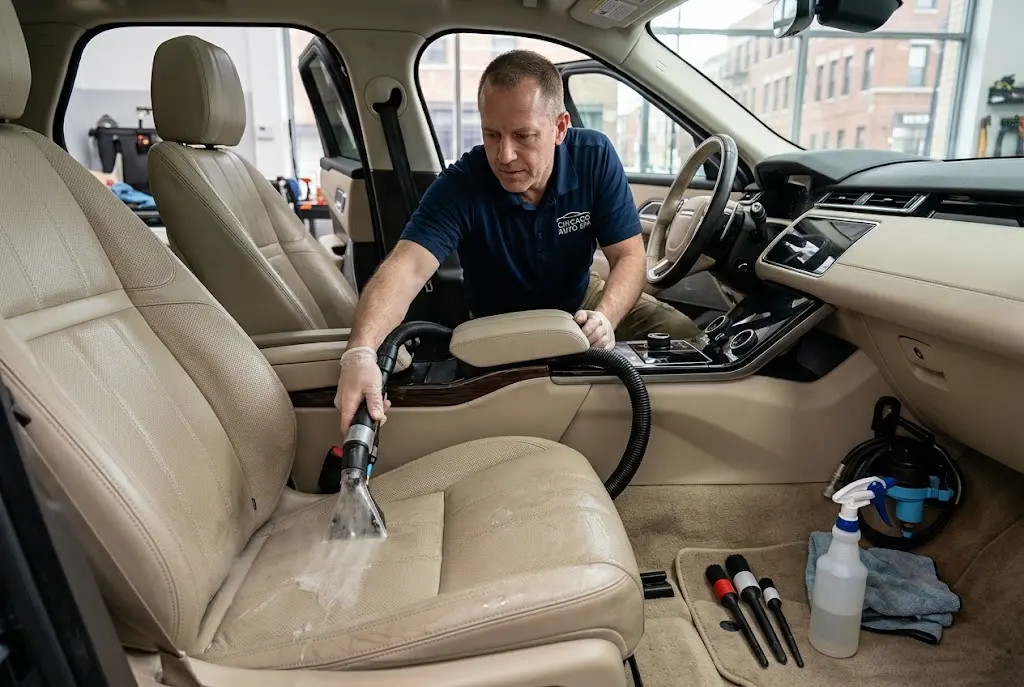
We prevent this by executing a dry decompression phase prior to introducing moisture. Using high-pressure pneumatic tools operating at 6 to 8 bar alongside industrial vacuum extraction, our technicians agitate and lift embedded sand, salt crystals, and dry soil out from deep carpet fibers and seat seams. Once dry particulates are extracted, we transition to hot-water extraction. Specialized cleaning solutions are injected under controlled pressure with water heated to 140°F–160°F. The thermal energy breaks down heavy oil chains, while our high-lift dual-vacuum turbine immediately pulls the suspended solution out of the padding, leaving the sub-layer roughly 90% dry upon completion.
Material Chemistry: Leather, Alcantara, and Plastics Care
Each interior material requires a precise pH balance and mechanical technique. Using aggressive alkaline cleaners on natural leather strips away its factory-applied protective polyurethane topcoat, leaches out essential natural oils, and leads to premature drying, stiffness, and shiny discoloration.
When working with leather upholstery, our specialists use strictly pH-neutral solutions (pH 6.5 to 7.5) applied as a dense, low-moisture foam. This foam opens the pores of the leather and encapsulates trapped oil and dirt without oversaturating the hide underneath. Agitation is performed using soft horsehair brushes to eliminate abrasive friction. After cleaning, the leather is treated with water-based conditioning feeds that restore natural flexibility and leave a factory-correct matte finish while shielding against UV degradation. For Alcantara and synthetic suede, we utilize non-thermal isopropyl extraction methods to clean fibers without causing pilling or matting.
HVAC Ductwork Sanitization & Ozone Odor Destruction
Persistent cabin odors caused by pets, smoke, or spilled liquids cannot be eliminated with masking air fresheners. The root source of organic odor lies in bacterial buildup and fungal spores settled deep within HVAC evaporator coils and seat padding layers.
To achieve complete cabin decontamination, we run a two-part sanitization sequence:
- Dry Vapor Steam Duct Cleansing: High-temperature dry vapor steam (260°F+) is introduced directly into the climate control vents. This thermal shock instantly neutralizes microbial colonies along duct walls and drain lines without generating standing water that could threaten electronic control modules.
- Controlled Ozone Gas Oxidation: Once the cabin is physically cleaned and dried, we run an industrial-grade ozone generator inside the sealed interior. Ozone ($O_3$) acts as a powerful oxidizing agent, penetrating deep into headliners, seat foam, and carpet under-padding to permanently break down complex organic odor molecules into harmless water and carbon dioxide.
Electronic Isolation & Quality Control
Modern vehicles feature delicate occupant-classification sensors, side-airbag wiring looms, and seat-heating elements positioned directly beneath floor carpets and upholstery. Uncontrolled water usage or harsh solvents can easily short-circuit control modules and trigger dashboard fault lights.
Our technicians adhere strictly to an isolation checklist before service: under-seat electrical harnesses and center console button clusters are shielded with dielectric barriers, and cabin humidity levels are measured with digital moisture meters before the vehicle is cleared for delivery. Through our insured valet concierge service, Chicago vehicle owners do not need to take time out of their workday to visit our West Town studio—we pick up your car directly from your residence or garage, perform our full technical restoration, and deliver it back dry, sanitized, and fully protected.