Car finance can make buying a vehicle more manageable by spreading the cost through a deposit and regular payments rather than paying the full purchase price upfront. However, different finance arrangements can have very different costs, ownership conditions and end-of-contract options. Understanding how car finance works can help UK motorists compare deals more confidently and avoid choosing a package based only on its monthly payment.
Whether you are considering a new vehicle, used car finance or a dealership finance package, the important figure is not simply what you pay each month. Deposit requirements, interest, contract length, mileage limits, final payments and the total amount payable can all affect the real cost of vehicle ownership.
What Is Car Finance?
Car finance is a way of funding a vehicle purchase or use through a credit or hire agreement rather than paying the entire cost from savings. Depending on the arrangement, you may make an initial deposit followed by monthly payments for an agreed period.
The main forms of car finance available to UK consumers include Personal Contract Purchase (PCP), Hire Purchase (HP), personal loans and other vehicle finance arrangements. Personal Contract Hire (PCH) is also available for motorists who want to lease a vehicle rather than own it.
MoneyHelper explains that PCP and HP are two common forms of car finance, while personal loans and leasing provide alternatives depending on the buyer’s circumstances.
The right option depends on factors such as how long you expect to keep the vehicle, how much you can afford upfront, your expected mileage and whether ownership at the end of the agreement is important.
How Does Car Finance Work?
Although the details differ between agreements, the basic process is relatively straightforward. You select a vehicle, decide how much you can pay upfront, apply for finance and then make the agreed payments if the application is accepted.
The finance provider will assess your application before deciding whether to offer credit and on what terms. The rate you receive can affect your monthly payment and the overall cost of borrowing.
Before signing an agreement, buyers should look beyond the headline monthly figure. A deal with a lower monthly payment may have a larger final payment, a longer contract or other conditions that make it more expensive overall.
PCP Car Finance Explained
Personal Contract Purchase, commonly known as PCP, is a popular form of car finance. It normally involves a deposit, monthly payments and a deferred final payment if you want to own the vehicle at the end.
MoneyHelper explains that a PCP agreement is based on a deposit, monthly payments and a large optional balloon payment at the end. The final amount is based on an estimated future value of the vehicle, often referred to as the Guaranteed Minimum Future Value.
At the end of the agreement, you generally have several choices. You can pay the final amount and take ownership, return the vehicle subject to the agreement’s conditions, or potentially move into another finance arrangement.
PCP can produce lower monthly payments than some other ownership-focused finance options because part of the vehicle’s value is deferred until the end. However, the lower monthly figure should not be interpreted as meaning the vehicle is necessarily cheaper to buy.
What to Check on a PCP Agreement
Before agreeing to PCP car finance, buyers should understand:
- The amount of the initial deposit
- The monthly repayment
- The interest rate and APR
- The length of the agreement
- The final balloon payment
- The annual mileage allowance
- Potential excess mileage charges
- Conditions relating to vehicle damage and wear
- Any additional fees
- The total amount payable if you decide to own the vehicle
MoneyHelper specifically recommends checking the deposit, balloon payment, monthly payments, interest, APR, total cost, contract length, mileage allowance and early-return conditions before agreeing to PCP.
Hire Purchase and Car Finance
Hire Purchase, or HP, is another common form of vehicle finance. It generally involves paying a deposit followed by monthly payments over an agreed period. Once the agreement has been completed and the relevant final fee has been paid, ownership transfers to the buyer.
Unlike PCP, HP does not normally rely on a large balloon payment at the end. Because the full vehicle cost is generally spread across the agreement, monthly payments can be higher than those offered by a comparable PCP arrangement.
MoneyHelper describes HP as a way of financing a new or used car where the buyer makes a deposit and monthly payments, with ownership coming at the end of the contract after the relevant final payment.
HP may therefore appeal to buyers who want a clearer route to ownership and do not want to plan around a large deferred payment.
Used Car Finance: What Changes?
Used car finance can make a second-hand vehicle more accessible when paying the full price upfront is not practical. However, financing a used car requires the same attention to affordability as financing a new vehicle.
Buyers should consider the vehicle’s age, mileage, condition and expected maintenance requirements alongside the finance agreement. A lower purchase price does not automatically mean lower ownership costs.
An older vehicle may have a smaller finance requirement but could require more frequent repairs or maintenance. Conversely, a newer used vehicle may cost more to finance but potentially offer a different balance between purchase price and anticipated maintenance needs.
This is why the finance agreement should be considered alongside the vehicle itself rather than treated as a separate decision.
Why a Vehicle Inspection Matters Before Financing
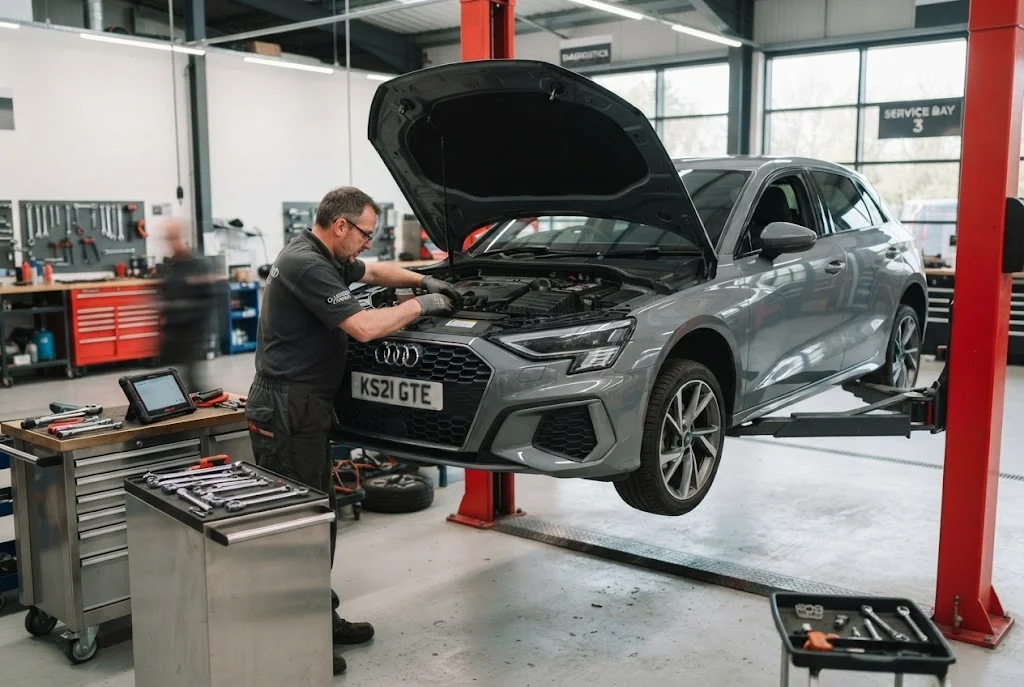
When buying a used vehicle with finance, buyers are committing to monthly payments while also taking responsibility for the vehicle’s running costs. A professional vehicle inspection can therefore be useful before completing a purchase, particularly when buying an older or higher-mileage car.
An inspection can help identify potential mechanical, structural, steering, suspension, tyre or other issues. It does not guarantee that every future fault will be identified, but it can provide additional information before a buyer commits to a finance agreement.
Checking the vehicle’s MOT history and service history is also important. These records can provide useful context about the vehicle’s previous condition and maintenance.
Dealership Finance vs Other Vehicle Finance Options
Dealership finance is convenient because the finance application can often be arranged as part of the vehicle purchasing process. The dealer may present several finance packages and explain how the deposit, monthly payment and contract length affect the deal.
Convenience, however, should not replace comparison. Buyers should compare the total amount payable, APR, deposit and contract terms rather than choosing the package with the lowest advertised monthly payment.
Personal loans can provide another route to funding a vehicle. With a personal loan, the borrower receives the money from a lender and uses it to purchase the car. MoneyHelper notes that personal loans can allow the buyer to own the vehicle outright, although the monthly repayments and total interest need to be considered.
Comparing options before visiting a dealership can therefore give buyers a better understanding of what they can realistically afford.
Vehicle Finance and Credit Checks
Most mainstream vehicle finance arrangements involve a credit assessment. The finance provider uses information about the applicant’s financial circumstances and credit history when assessing the application.
MoneyHelper recommends checking your credit report and score before borrowing and notes that applicants should consider their budget and income when looking at car loans.
A credit check does not mean that every applicant will receive the same interest rate or finance terms. The outcome can depend on the lender, applicant and specific agreement.
Anyone uncertain about the affordability of a proposed agreement should avoid relying on an approval alone. Being accepted for finance does not necessarily mean that the resulting monthly payment is comfortable within a household budget.
Look Beyond the Monthly Car Finance Payment
One of the most common mistakes when comparing car finance is focusing too heavily on the monthly payment. A low monthly figure can sometimes be achieved through a larger deposit, longer agreement or deferred final payment.
Ownership affordability includes much more than finance repayments. Motorists also need to budget for insurance, fuel or charging, servicing, MOT costs where applicable, tyres, repairs, road tax where applicable and other running expenses.
MoneyHelper recommends considering costs such as insurance, MOT, servicing and other running expenses when deciding what vehicle is affordable.
A realistic vehicle budget should therefore leave enough room for routine maintenance and unexpected expenses rather than using the maximum amount available for the finance payment.
Car Finance and Ownership Affordability
Ownership affordability is about whether the complete cost of having a vehicle fits comfortably within your finances. Two cars with identical finance payments can have very different total ownership costs.
For example, one vehicle may have lower insurance and maintenance costs, while another may require more expensive tyres or servicing. Fuel consumption, annual mileage and depreciation can also affect the overall economics of ownership.
This makes it useful to calculate an approximate monthly vehicle budget before choosing the finance agreement. Start with the finance payment, then add realistic estimates for insurance, fuel, servicing and maintenance. Keep some room for unexpected repairs rather than assuming every month will cost the same.
How Mileage Can Affect Car Finance
Mileage is particularly important with PCP agreements. The annual mileage you agree at the beginning can influence the vehicle’s expected future value and therefore the structure of the finance agreement.
MoneyHelper notes that PCP contracts commonly include an annual mileage allowance and that exceeding the agreed mileage can result in additional charges. It recommends agreeing an allowance that reflects how much you actually expect to drive.
Before choosing a finance package, look at your normal commute, family trips, business mileage and longer journeys. Underestimating mileage to obtain a lower payment can create additional costs later.
Can You End Car Finance Early?
Ending car finance early is possible in certain circumstances, but the process and consequences depend on the agreement. Buyers should not assume that returning the vehicle early automatically clears the outstanding finance.
MoneyHelper explains that consumers may have options for ending PCP and HP agreements early, including voluntary termination in certain circumstances, but specific conditions apply. It recommends obtaining accurate information about the settlement position and understanding the relevant rights before making a decision.
If your financial circumstances change, contact the finance provider before simply stopping payments. Missing payments can create additional problems, while early settlement or another available option may be more appropriate depending on the agreement.
Questions to Ask Before Choosing a Finance Package
Before committing to car finance, ask the dealer or finance provider to explain the complete agreement in straightforward terms.
- How much is the deposit?
- What is the monthly payment?
- What is the APR?
- How much will I repay in total?
- Is there a final balloon or option-to-purchase payment?
- Who owns the vehicle during the agreement?
- What mileage allowance applies?
- What happens if I exceed the mileage?
- What happens if I want to end the agreement early?
- Are there additional administration, damage or other charges?
- What running costs should I budget for separately?
If any part of the agreement is unclear, ask for an explanation before signing. MoneyHelper advises consumers not to proceed with a PCP deal they do not understand.
Car Finance for Different Types of Buyers
There is no single finance arrangement that is best for every driver. Someone who changes vehicles regularly and prioritises lower monthly payments may approach PCP differently from someone who wants to keep a car for many years.
A buyer who wants straightforward ownership at the end may prefer to compare HP or a personal loan. Someone purchasing an older used vehicle may need to place greater emphasis on the car’s condition and expected maintenance costs before considering finance.
The key is to match the agreement with your actual plans. Choosing a finance structure simply because it produces an attractive advertised payment can create problems if the contract does not fit your mileage, ownership expectations or budget.
Car Finance and Long-Term Vehicle Costs
Finance does not remove the ordinary costs of maintaining a vehicle. Tyres, servicing, brakes, suspension and other components still require attention as the vehicle ages.
For example, motorists should monitor tyre condition and understand when professional tyre services such as fitting, replacement, repairs and balancing may be required. Similarly, wheel alignment can become relevant when steering behaviour or uneven tyre wear suggests that wheel geometry needs checking.
Planning these costs alongside finance repayments gives a more realistic picture of vehicle affordability. A car that appears affordable from the finance payment alone may be less suitable once insurance, maintenance and repair costs are included.
Choosing Car Finance Responsibly
The most useful approach to car finance is to treat it as part of a wider vehicle ownership decision. Start with a realistic budget, choose a vehicle that fits your needs, check its condition and history, and then compare finance arrangements using the total cost rather than the monthly payment alone.
PCP can offer flexibility and potentially lower monthly payments, but it comes with a deferred final payment and mileage considerations. HP provides a more direct route towards ownership but can involve higher monthly payments. Personal loans provide another alternative for buyers who want to own the vehicle outright.
None of these options is automatically right or wrong. The best choice depends on the vehicle, the agreement terms and your financial circumstances.
Final Thoughts on Car Finance
Car finance can make vehicle ownership more accessible, but a finance agreement is a financial commitment rather than simply a way to reduce the monthly cost of a car. Understanding the difference between PCP, HP, dealership finance and vehicle loans can help buyers make more informed decisions.
Before signing, calculate the total amount payable, understand the deposit and any final payment, check mileage conditions and consider the full cost of running the vehicle. For used cars, combine finance decisions with a proper vehicle history check, service history review and, where appropriate, an independent inspection.
Ultimately, good car finance planning is about finding a vehicle and payment structure that remain affordable beyond the showroom. A sustainable monthly budget should account for both finance repayments and the everyday costs of keeping the vehicle safe, maintained and reliable.